For beginners exploring colorwork, a small square with two large color blocks is a good practice project.
- Filet Crochet and Openwork Lace
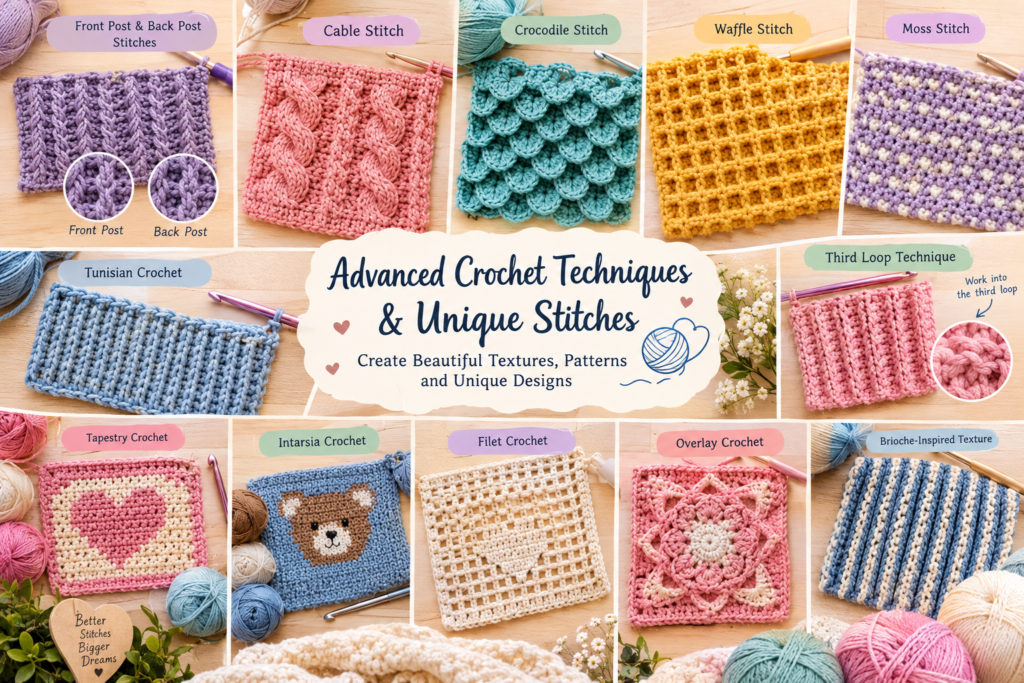
Filet crochet creates decorative patterns using a grid of open and filled spaces. It can produce elegant motifs, lettering, flowers, and geometric designs.
The basic structure usually combines chain spaces and double crochet stitches. Filled sections use more stitches, while open sections leave gaps.
Reading a Filet Crochet Chart
Filet patterns are often presented as grids. Each square represents either an open or filled section, according to the chart’s instructions.
Read the chart carefully and keep track of your row direction. Some patterns are worked from the bottom upward, while others use different chart conventions.
Best Uses for Filet Crochet
Filet crochet works beautifully for:
Curtains
Table runners
Decorative wall pieces
Lightweight shawls
Lace panels
Because filet crochet intentionally creates openings, consider the intended use of the finished item. Openwork may be attractive for décor but is not suitable for every garment or baby accessory.
- Overlay Crochet and Three-Dimensional Texture
Overlay crochet combines a base fabric with additional stitches worked on top of it. This creates raised motifs, colorful geometric shapes, and dramatic surface patterns.
Unlike simple post stitches, overlay crochet can involve several layers of stitches and carefully planned color placement.
What Makes Overlay Crochet Unique?
The technique allows you to create shapes that stand out from the background. Depending on the pattern, the surface may resemble tiles, flowers, or interlocking geometric designs.
Share your thoughts
We'd love to hear your perspective. Keep it thoughtful and respectful.