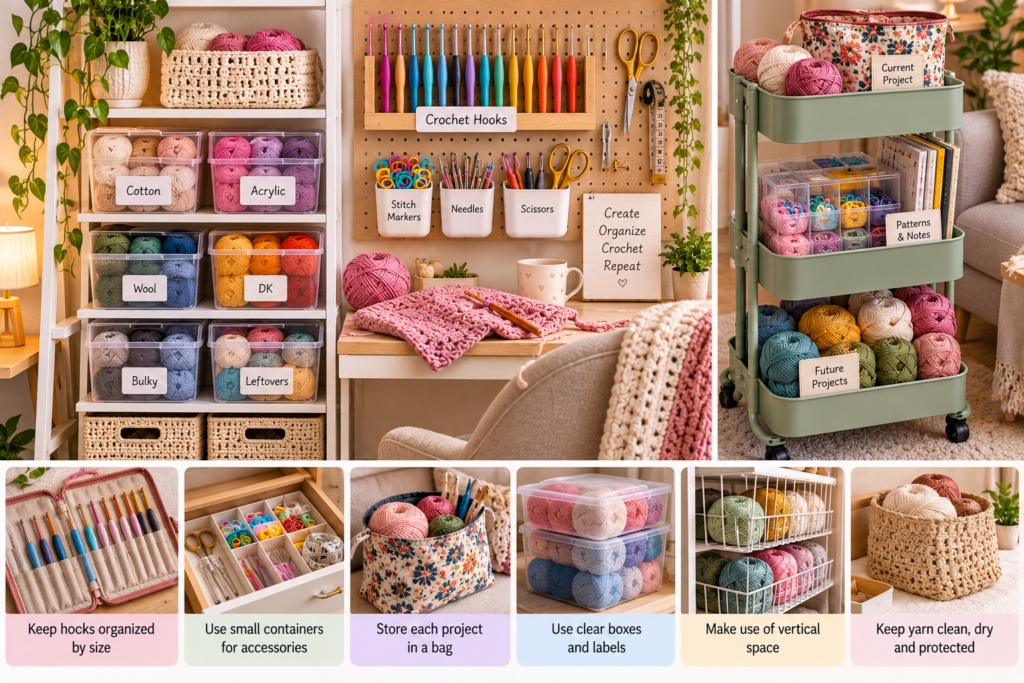
Crochet hooks are small, easy to misplace, and available in different sizes and materials. A consistent storage system prevents frustration when you begin a new project.
Use a Crochet Hook Case
A hook case with individual slots is one of the simplest solutions. It keeps hooks together and makes it easy to identify the size you need.
Choose a case that fits your collection without forcing hooks into tight spaces. Some cases have extra pockets for stitch markers, tapestry needles, scissors, and measuring tapes.
A compact roll-up case is particularly useful if you crochet in different rooms or carry projects when traveling.
Use a Small Drawer Organizer
If you already have a desk or dresser, use a shallow drawer organizer to separate hooks by size. Small compartments prevent tools from mixing together.
You can label compartments with the hook sizes you use most often. If your hooks have faded markings, keep them in a case that identifies each size or check their size with an appropriate measuring tool.
Avoid placing hooks loosely in a deep drawer with heavy objects. They may become scratched, bent, or difficult to find.
Store Interchangeable Hooks Carefully
If you use interchangeable hook sets, keep each hook with its corresponding connector or accessory. Store the set in its original case or a dedicated organizer to avoid losing small components.
For wooden hooks, avoid excessive pressure or storage conditions that could damage the material. Clean all hooks according to the manufacturer’s instructions.
Share your thoughts
We'd love to hear your perspective. Keep it thoughtful and respectful.