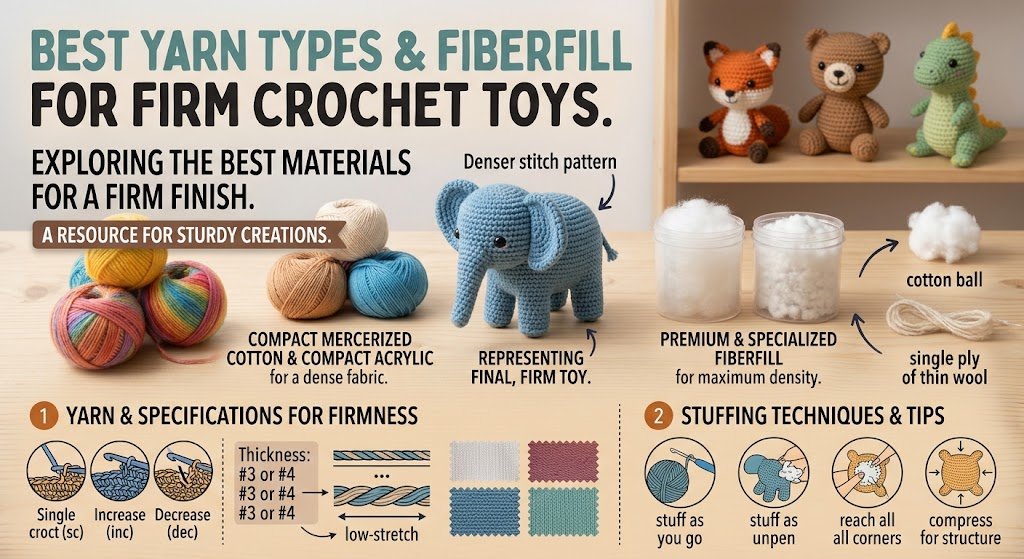
It comes in a broad range of colors, is usually easy to find, and can produce soft, lightweight crochet toys. Depending on its construction, acrylic yarn may have more stretch and elasticity than cotton.
This flexibility can make it comfortable to crochet with, although excessive stretch may affect the shape of a toy if the stitches are too loose.
Advantages of acrylic yarn:
- Affordable and accessible.
- Available in many colors.
- Lightweight and versatile.
- Often comfortable to work with.
- Suitable for everyday crochet toys.
One potential disadvantage is that some acrylic yarns can look fuzzy or develop pills with repeated friction. Very soft acrylic yarn may also make it more difficult to achieve crisp stitch definition.
For firm amigurumi, choose a smooth acrylic yarn and use a hook that creates dense stitches.
Best for: Beginners, colorful animal toys, larger stuffed characters, and budget-friendly projects.
3. Cotton-Acrylic Blend Yarn
Cotton-acrylic blends combine characteristics of both fibers. Depending on the proportions and manufacturing process, these yarns may offer a balance between stitch definition, softness, flexibility, and ease of use.
A blend containing a substantial amount of cotton can provide a relatively defined stitch structure, while the acrylic component may add softness or elasticity.
The exact result depends on the specific yarn, so it is worth making a small test piece before starting a large project.
Advantages include:
- A balance of softness and structure.
- Good versatility for different designs.
- Potentially easier handling than some pure cotton yarns.
- A wide range of colors and textures.
Share your thoughts
We'd love to hear your perspective. Keep it thoughtful and respectful.