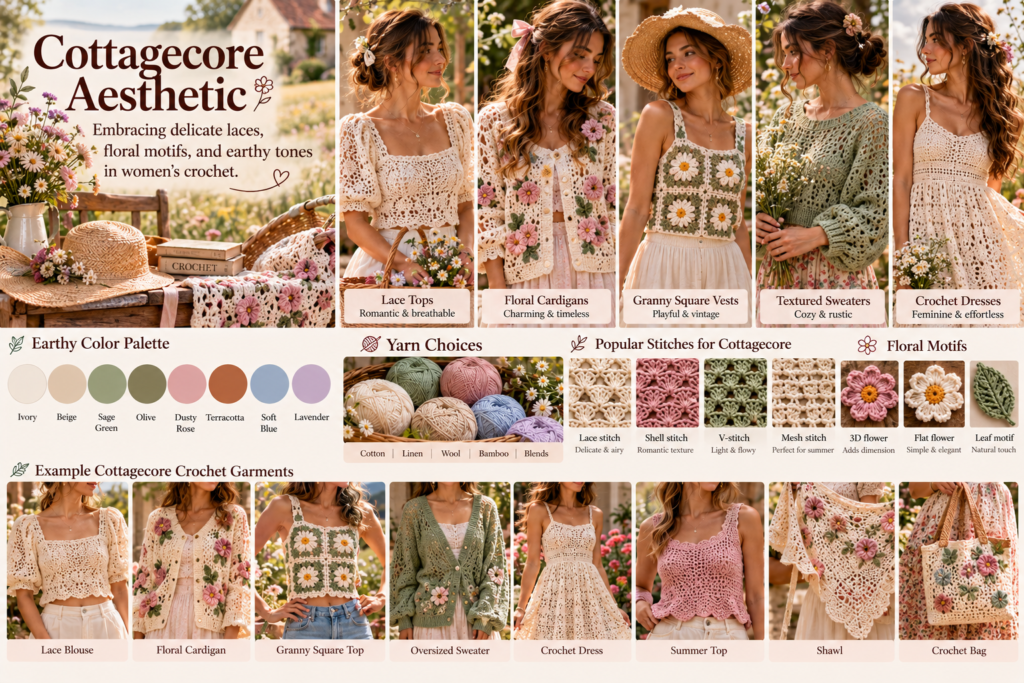
However, cotton has limited natural elasticity compared with many wool yarns. A heavy cotton garment may also stretch under its own weight, so it is important to check gauge and garment construction before beginning.
For delicate cottagecore designs, a lightweight cotton yarn can create a neat, breathable fabric that highlights the stitch pattern.
Linen and linen blends
Linen and linen-blend yarns can produce a beautiful natural texture. Their slightly crisp appearance suits rustic, understated garments such as loose summer tops, simple cardigans, and textured vests.
Linen may soften with use and washing, although its behavior depends on the yarn construction and blend. Because it often has less elasticity than wool, gauge and fit should be checked carefully.
For a rustic cottagecore look, natural linen shades, muted beige, warm ivory, and dusty green can work particularly well.
Wool and wool blends
Wool is suitable for cozy cottagecore sweaters, textured cardigans, and autumnal garments. Depending on the yarn, it can provide warmth, elasticity, and a soft drape.
A lightweight wool blend may be ideal for a floral cardigan that needs both warmth and flexibility. Wool can also emphasize raised stitches, making it useful for textured petals, leaves, and decorative borders.
Choose yarn that feels comfortable against the skin, especially for garments worn close to the neck or arms.
Acrylic and blended yarns
Acrylic yarns offer a wide range of colors and are often accessible to beginners. Some produce soft, lightweight fabric, while others feel firmer or have less desirable drape.
Share your thoughts
We'd love to hear your perspective. Keep it thoughtful and respectful.