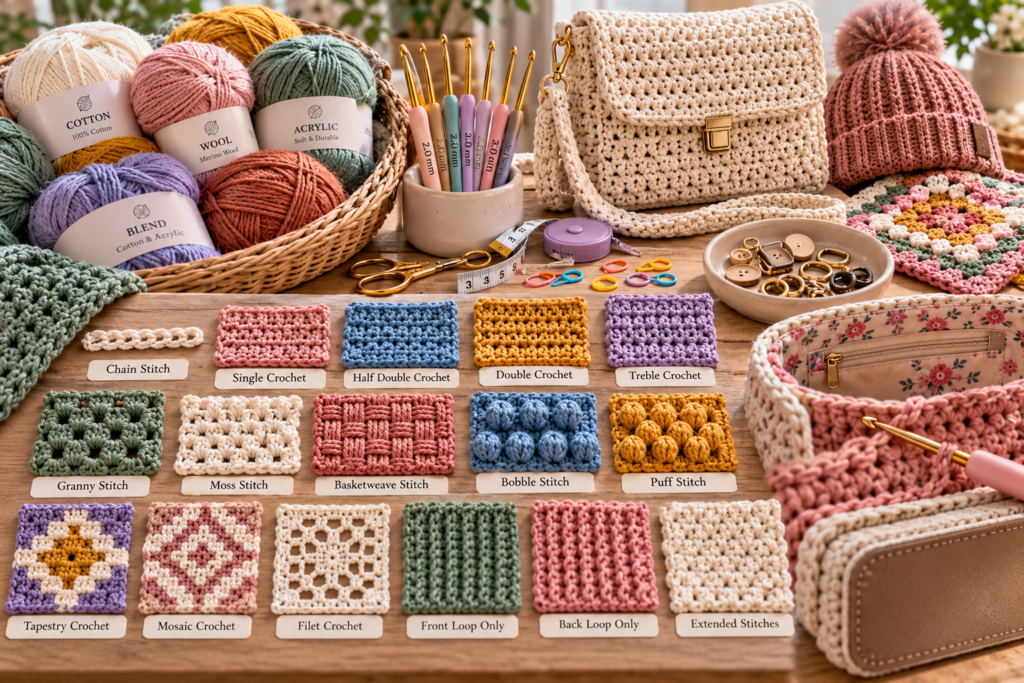
It can be particularly useful for lace shawls, garments, granny squares, and projects where consistent dimensions matter.
Different methods include wet blocking, steam blocking, and spray blocking. The appropriate method depends on the fiber and the yarn manufacturer’s care recommendations.
Wet Blocking
Wet blocking involves gently wetting the item, removing excess water without twisting, and shaping it to the desired measurements while it dries.
This method can be useful for suitable natural fibers and many other yarns, but not every material responds in the same way.
Steam Blocking
Steam blocking uses steam to relax the fibers and help the fabric settle into shape.
It requires care because excessive heat can damage synthetic fibers or alter the yarn’s texture.
The iron or steamer should not be pressed directly against a material that may be heat-sensitive unless the manufacturer’s instructions specifically allow it.
Spray Blocking
Spray blocking involves lightly dampening the fabric and shaping it while it dries.
It can be a convenient method for projects that need modest adjustment rather than extensive reshaping.
Blocking does not correct every construction problem. It cannot reliably compensate for incorrect stitch counts, poorly joined panels, or a yarn that is fundamentally unsuitable for the project.
- Color Selection and Colorwork Techniques
Color is an important part of crochet design. It can emphasize texture, define shapes, and influence the overall mood of a finished piece.
Working with Solid Colors
Solid colors are particularly effective when the stitch pattern itself provides visual interest.
Share your thoughts
We'd love to hear your perspective. Keep it thoughtful and respectful.