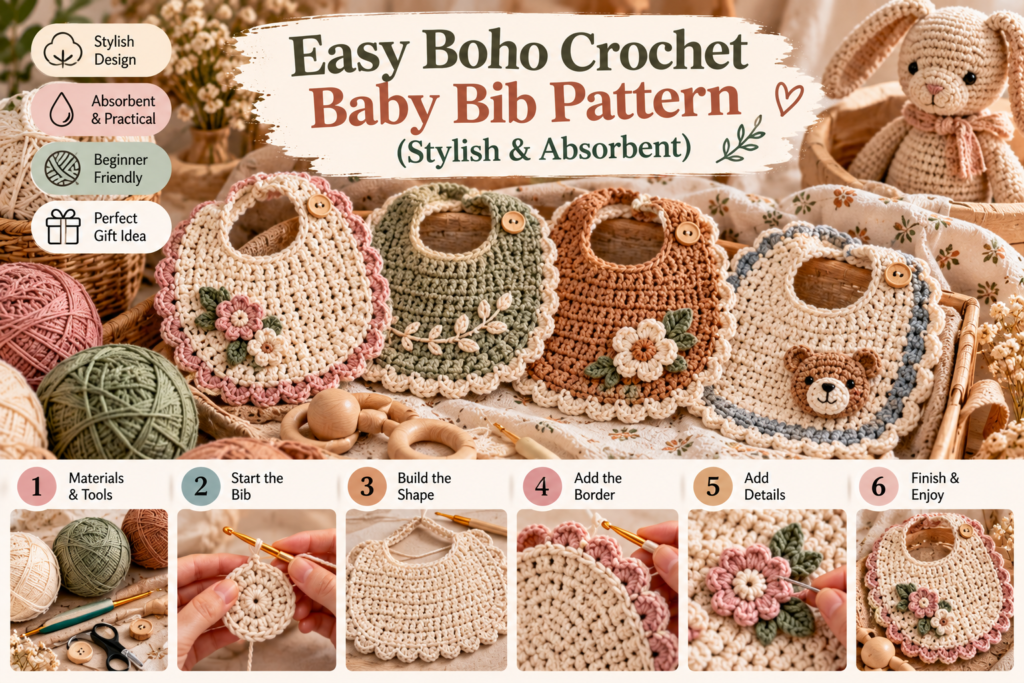
Start with a small range of designs: a plain cream bib, a two-tone bib, and a striped version. Keeping the same basic shape can simplify production while allowing customers to choose different colors.
Photograph the texture
Use soft, natural light and a simple background to show the stitch definition and color accurately. Include a close-up of the border and a photograph that clearly communicates the product’s size.
You can style the bib beside a folded blanket or yarn in matching colors, but make sure the photographs accurately represent what the customer will receive.
Calculate the price properly
Include yarn, backing material if used, packaging, labor, platform fees, and other business expenses when calculating your price.
A handmade bib should not be priced based on yarn cost alone. Time spent shaping, finishing, inspecting, washing, and preparing the product also contributes to its value.
Write honest product descriptions
State the materials, approximate dimensions, care instructions, and intended use. Explain whether the bib is designed primarily for drooling or light feeding spills.
Do not describe the product as waterproof, completely safe, or suitable for every age unless the claims are supported by appropriate evidence.
Check applicable requirements
Products intended for babies may be subject to specific safety, labeling, chemical, or textile requirements, depending on where they are sold. Research the rules for your target market before selling, and obtain professional advice or testing where necessary.
A handmade product is not automatically exempt from product-safety obligations.
Conclusion
Share your thoughts
We'd love to hear your perspective. Keep it thoughtful and respectful.