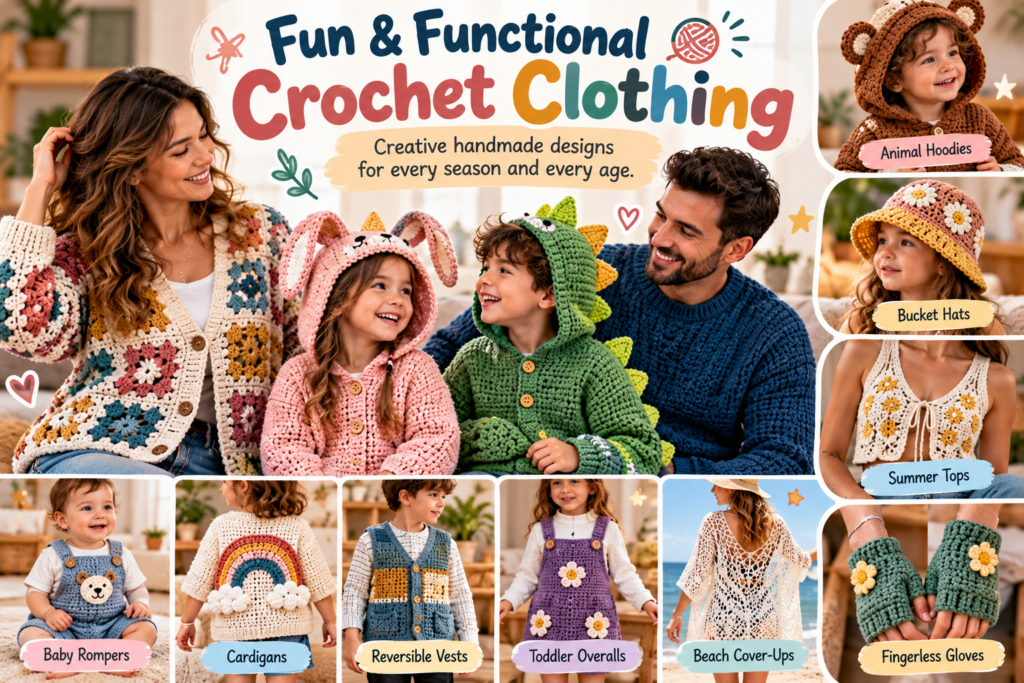
Embroidery and integrated crochet details can be useful alternatives, provided they are securely finished.
Think About Everyday Practicality
Children’s garments may be worn at daycare, during playtime, or outdoors.
Consider whether the clothing is easy to wash, comfortable to sit and move in, and durable enough for regular use.
Matching Family Crochet Outfits
Matching family clothing is another creative direction within fun and functional fashion.
Instead of making identical garments for every family member, you can create coordinated pieces using the same colors, stitch patterns, or decorative motifs.
For example:
A cardigan for an adult.
A smaller matching vest for a child.
Coordinated hats for the family.
Matching scarves.
Complementary summer tops.
The garments do not need to be identical. A shared color palette can create a coordinated look while allowing each person to wear a style that suits their needs.
When making family outfits, select yarn according to each garment’s purpose. A summer top and a winter cardigan may require different fiber types even if they share the same colors.
Understanding Measurements and Crochet Gauge
One of the most important parts of garment construction is achieving the correct size.
Crochet tension can vary from one person to another, even when using the same yarn and hook.
A gauge swatch helps you estimate how many stitches and rows are needed to achieve a particular measurement.
Take Accurate Measurements
Depending on the garment, useful measurements may include:
Chest circumference.
Waist circumference.
Hip circumference.
Shoulder width.
Arm length.
Upper arm circumference.
Share your thoughts
We'd love to hear your perspective. Keep it thoughtful and respectful.