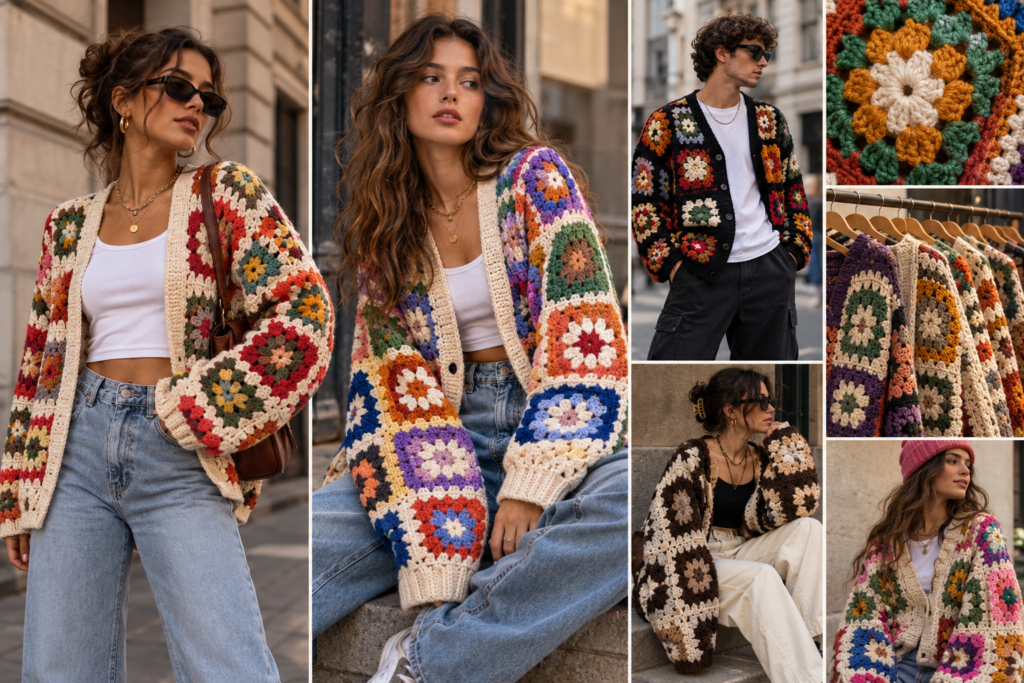
Patchwork is one of the most recognizable features of vintage-inspired crochet cardigans. The technique involves joining separate pieces of fabric or crocheted motifs to create a larger textile composition.
In crochet garments, patchwork often takes the form of individual squares, rectangles, or geometric motifs connected to produce the body, sleeves, and other sections of the cardigan. These elements can vary in color, stitch pattern, and texture, creating a rich visual composition.
Traditional granny squares are particularly popular. Usually built around a central point and expanded through successive rounds, they can incorporate several colors within a single square. When joined together, these motifs produce the familiar patchwork appearance associated with vintage crochet.
However, contemporary designs are not limited to traditional granny squares. Some feature checkerboard arrangements, floral motifs, asymmetrical color blocks, striped sections, or combinations of solid and openwork stitches. Designers can also experiment with different yarn thicknesses to create contrasting textures.
The appeal of patchwork lies partly in its apparent irregularity. Unlike garments built around perfectly uniform surfaces, patchwork designs celebrate variation. The arrangement of colors and motifs can appear playful, artistic, and spontaneous.
A cardigan might combine muted brown, cream, and olive tones for a subtle retro effect. Another might use orange, turquoise, pink, and yellow to create a more expressive statement piece.
This flexibility makes vintage patchwork attractive to different audiences. Minimalist dressers can choose restrained palettes, while people who enjoy bold fashion can experiment with brighter combinations.
Share your thoughts
We'd love to hear your perspective. Keep it thoughtful and respectful.