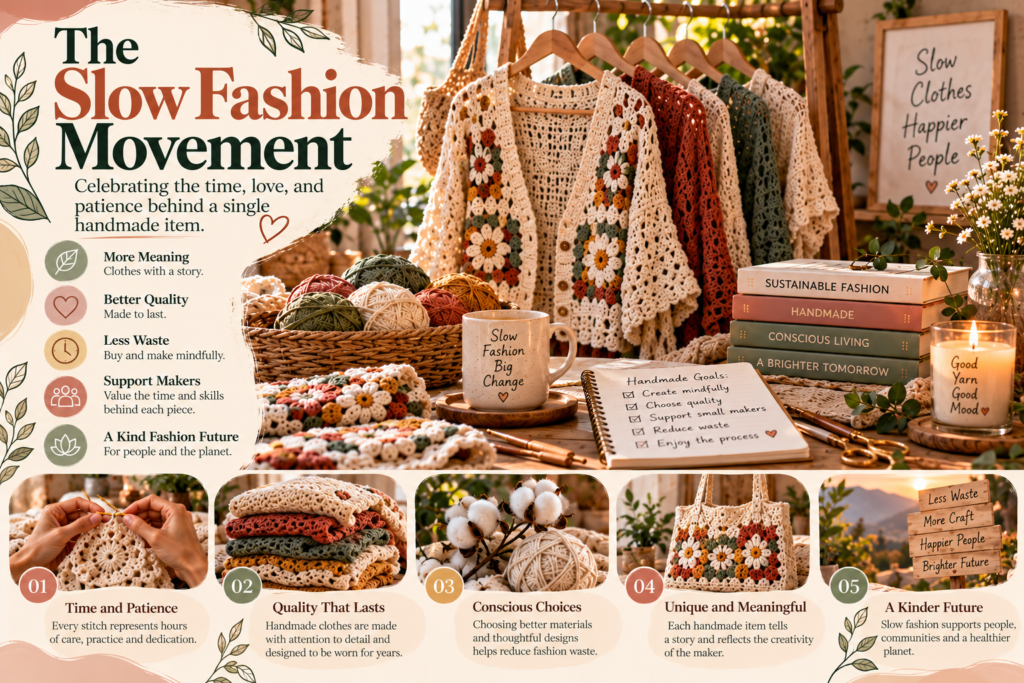
Slow fashion encourages consumers and makers to consider the origin and performance of the materials they use.
No fiber is perfect in every situation. The most suitable choice depends on the garment’s purpose, expected lifespan, maintenance requirements, and the maker’s priorities.
Natural Fibers
Cotton, linen, and wool are commonly used in handmade clothing.
Cotton can be comfortable in warm weather, while linen often provides a light, breathable fabric. Wool offers warmth and elasticity for suitable projects.
However, natural fibers have environmental impacts too. Cotton production may involve significant water and agricultural inputs, while wool’s impact depends on animal management, land use, processing, and other factors.
The term “natural” should therefore not be treated as proof that a product is automatically sustainable.
Recycled and Reused Materials
Recycled yarn can provide an alternative to some virgin materials, depending on its composition and production method.
Makers can also use leftover yarn from previous projects, provided it is suitable for the intended garment.
Small quantities of different colors may work well for striped tops, granny squares, decorative borders, or accessories.
Using existing materials can reduce the need for additional purchases and help prevent craft supplies from becoming waste.
Nevertheless, it is important to select materials that will produce a garment the wearer actually wants to use.
Buy Only What You Need
Buying large quantities of yarn because it is discounted may appear economical, but unused materials still occupy resources and money.
Share your thoughts
We'd love to hear your perspective. Keep it thoughtful and respectful.