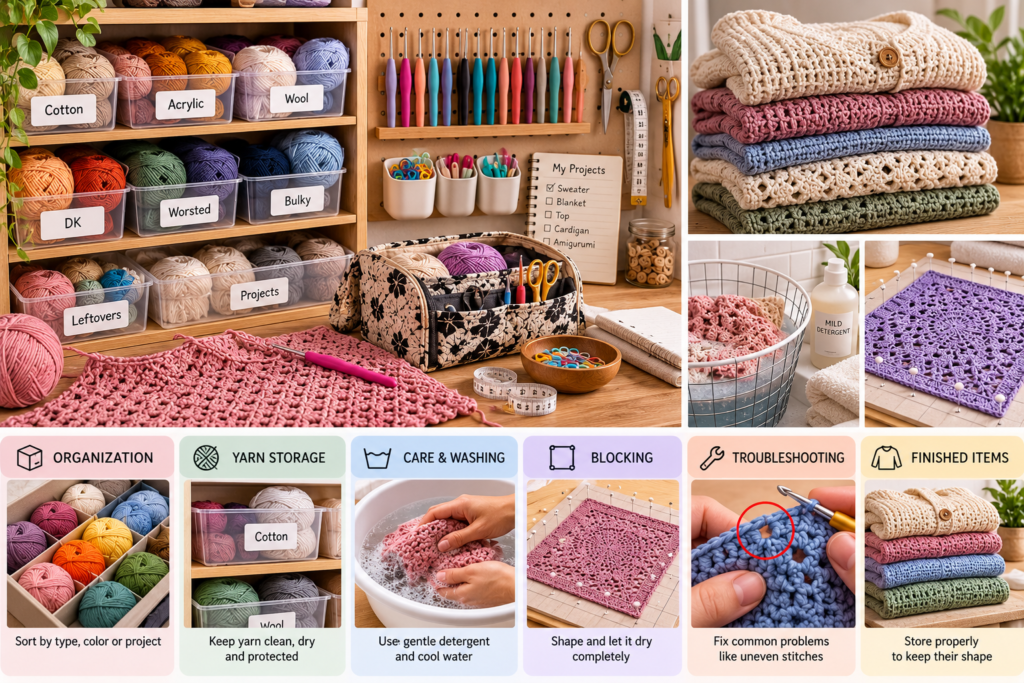
Store yarn in a clean, dry location away from direct sunlight, excessive heat, and moisture. Prolonged sunlight can fade some colors, while damp conditions may encourage mold and unpleasant odors.
Avoid placing yarn directly on the floor, especially in areas where water leaks or dust accumulation are possible.
If you live in a humid environment, inspect your storage area regularly. Do not seal damp yarn inside an airtight container because trapped moisture can cause problems.
Protect Yarn From Dust and Pests
Lidded storage boxes or clean fabric bags can help protect yarn from dust. Natural fibers such as wool may attract clothes moths and other textile pests.
Inspect stored yarn periodically for signs of insect activity, unusual debris, or damage. Keep the storage area clean and follow appropriate textile-storage practices.
If you discover an infestation, separate the affected materials from the rest of your supplies and identify the pest before choosing a treatment. Avoid applying chemicals directly to yarn unless the product is specifically suitable for that material.
Organize Yarn by Weight, Color, or Fiber
There are several useful ways to organize yarn, and the best method depends on the way you crochet.
By yarn weight: Group lace, fingering, DK, worsted, bulky, and other weights separately. This makes it easier to find yarn suitable for a pattern.
By color: Organize yarn into color families for projects that require coordinated shades.
Share your thoughts
We'd love to hear your perspective. Keep it thoughtful and respectful.