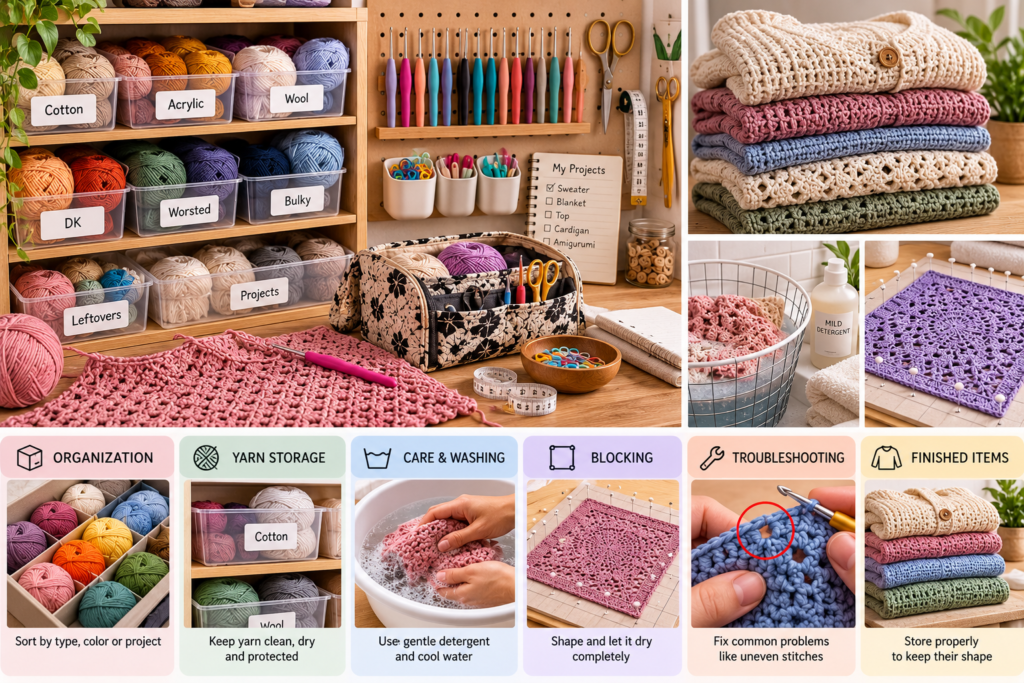
By fiber: Keep cotton, wool, acrylic, and blended yarns in separate groups when possible. Different fibers require different care and behave differently during crocheting and washing.
By project: If you buy yarn specifically for a sweater, blanket, or amigurumi project, keep the materials together with the pattern and notes.
It is also helpful to retain yarn labels until the project is finished. The label contains important information about fiber content, recommended hook size, care instructions, and dye-lot details.
Manage Leftover Yarn
Small yarn leftovers can be useful for stripes, granny squares, decorative borders, amigurumi details, and small accessories.
Instead of keeping every tiny scrap, sort leftovers by approximate length and usefulness. Label larger remnants with their fiber type and weight if known.
You can create a dedicated container for small projects or colorwork. However, discard scraps that are dirty, badly damaged, or too short to serve a practical purpose.
3. Keep Your Crochet Hooks and Tools Organized
Crochet hooks are easy to misplace, especially when working on multiple projects.
A hook case with individual slots keeps hooks together and makes sizes easy to identify. If your hooks have size markings that are difficult to read, consider organizing them in a labeled case rather than relying on memory.
Keep stitch markers, tapestry needles, row counters, and measuring tapes in a small accessory pouch. A magnetic container or securely closed organizer can help prevent small metal tools from getting lost.
Share your thoughts
We'd love to hear your perspective. Keep it thoughtful and respectful.