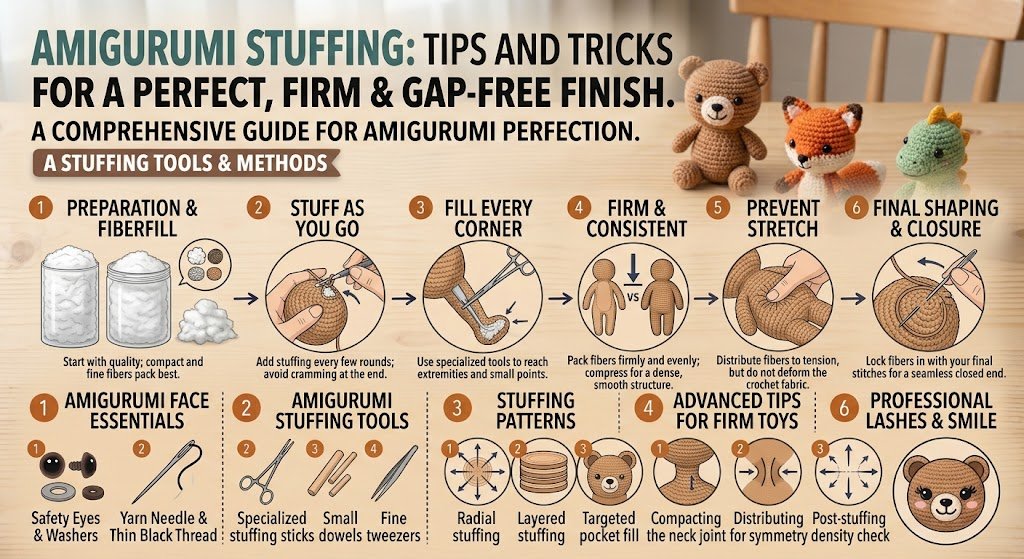
Stuffing also affects the appearance of your stitches. If you push too much filling into a tightly crocheted shape, the fabric may stretch and reveal gaps between the stitches.
The goal is not to make every toy extremely hard. Instead, aim for a balanced result: firm enough to hold its shape, but soft enough to remain pleasant to touch.
Choose the Right Stuffing Material
Before learning how to stuff amigurumi, choose a filling that suits your project.
- Polyester Fiberfill
Polyester fiberfill is one of the most popular stuffing materials for crochet toys. It is lightweight, widely available, and easy to separate into small pieces.
It works well for teddy bears, rabbits, cats, dolls, and many other amigurumi designs.
Advantages include:
Lightweight construction.
Easy distribution inside small shapes.
A soft finish with adjustable firmness.
Suitability for a wide range of toy sizes.
For most beginners, good-quality polyester fiberfill is a practical starting point.
- Recycled Polyester Stuffing
Some stuffing products are made partly or entirely from recycled polyester. Their softness, resilience, and texture depend on the manufacturer and product quality.
If you prefer recycled materials, check the product description and ensure that the stuffing is suitable for the intended project.
- Natural-Fiber Stuffing
Some crocheters use wool or other natural-fiber fillings for specific projects. These materials may have different weights, textures, and care requirements compared with polyester fiberfill.
They can be useful for certain handmade designs, but they are not always as easy to distribute evenly in very small limbs or narrow shapes.
Share your thoughts
We'd love to hear your perspective. Keep it thoughtful and respectful.