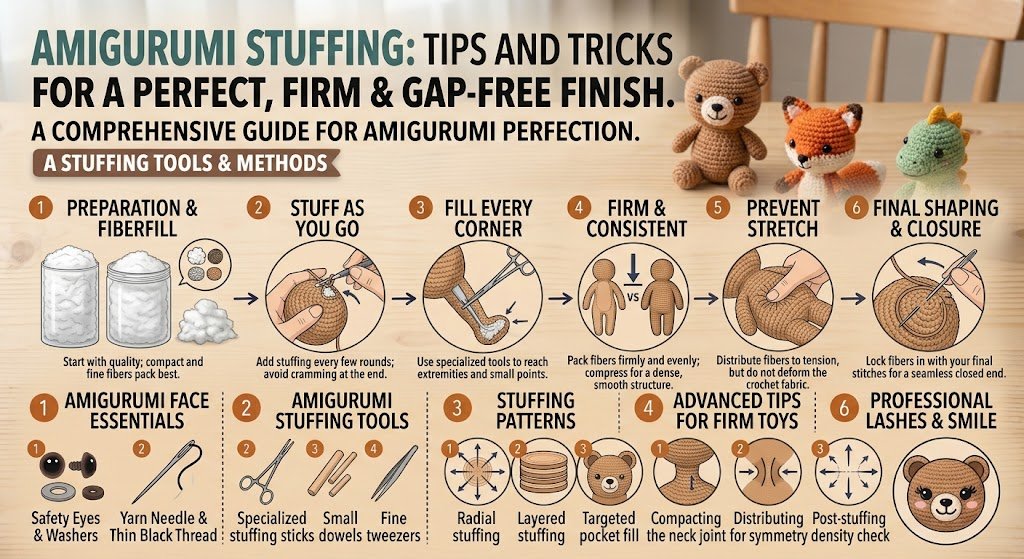
Redistribute rather than simply adding more. If one area feels hard and another feels empty, move the existing stuffing before adding more.
Follow the pattern’s proportions. A very round head may require more filling than a narrow limb, but the goal is to preserve the intended shape rather than use a fixed amount everywhere.
Remember that a smooth surface depends on both the crochet fabric and the distribution of the stuffing.
How to Prevent Stuffing From Showing Through the Stitches
Visible stuffing usually indicates that the crochet fabric is too open for the filling or that the toy has been overstuffed.
Check Your Hook Size
If the gaps are visible even before stuffing, try a smaller crochet hook and test the fabric again.
Adjust Your Stitch Tension
Keep your stitches firm and consistent. Very loose stitches may create openings that become more noticeable when the toy is filled.
Avoid Overstuffing
Adding too much fiberfill stretches the fabric and increases the space between stitches.
A firm toy does not need to be packed as tightly as possible. Use enough filling to support the shape without forcing the crochet fabric outward.
Choose Suitable Yarn
Smooth yarn with clear stitch definition can make it easier to create a dense outer fabric. Very fuzzy yarn may hide gaps while you crochet, making problems more difficult to identify.
If you are a beginner, practice with a smooth cotton or acrylic yarn before experimenting with chenille or other textured yarns.
Useful Tools for Easier Stuffing
Share your thoughts
We'd love to hear your perspective. Keep it thoughtful and respectful.