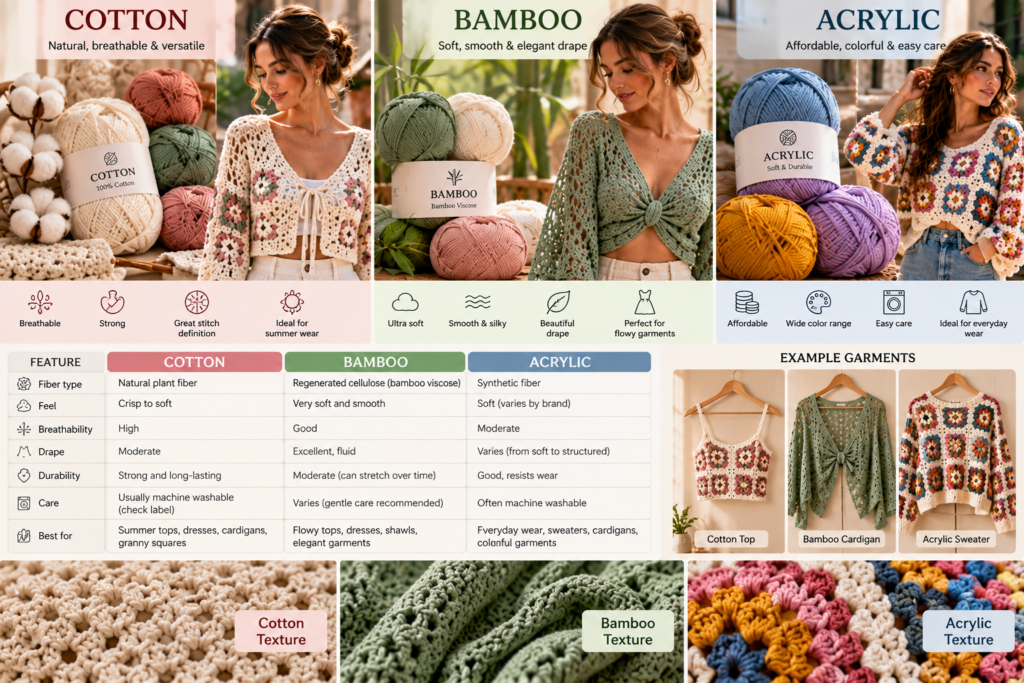
Breathability and comfort: Cotton fabric can allow air to circulate, depending on its construction. This makes it a practical choice for summer tops, lightweight cardigans, tank tops, and casual dresses.
Excellent stitch definition: Cotton often produces clearly defined stitches. This is particularly useful for crochet patterns featuring granny squares, geometric designs, textured panels, and decorative borders.
Versatility: Cotton yarn is available in many thicknesses, colors, and finishes. Fine cotton thread can create delicate lace garments, while medium-weight cotton can produce everyday tops and accessories.
Good durability: Many cotton yarns can withstand regular use when properly constructed and maintained. This makes cotton suitable for garments that will be worn frequently.
Natural appearance: Cotton can produce a matte, textured, or slightly lustrous finish depending on how it is spun or treated. It works well for minimalist, bohemian, and contemporary designs.
Limitations of Cotton Yarn
Cotton has relatively little natural elasticity compared with many wool-based yarns. This means that garments may not recover their original shape as easily after stretching.
A cotton top with a loose stitch pattern, for example, may gradually become longer under its own weight. A long cotton cardigan can also stretch if it is heavy and stored incorrectly.
Cotton can absorb considerable moisture, which may make a wet garment feel heavier and take longer to dry than some synthetic alternatives.
Share your thoughts
We'd love to hear your perspective. Keep it thoughtful and respectful.