Some acrylic yarns develop pills through friction, particularly around the underarms, sides, and areas where a bag or jacket rubs against the garment.
Acrylic can also be sensitive to high temperatures. Excessive heat from an iron, dryer, or other source may damage or permanently alter the fibers.
Its drape varies considerably. Some acrylic yarns produce a soft, flexible fabric, while others create a stiffer result. A gauge swatch is essential when the finished garment needs a specific silhouette.
Best Garments for Acrylic Yarn
Acrylic yarn is particularly useful for:
Casual cardigans.
Everyday sweaters.
Colorful crochet tops.
Granny-square garments.
Winter accessories.
Beginner-friendly clothing projects.
Garments that need straightforward care.
For summer clothing, select a lightweight acrylic yarn and an appropriate stitch pattern. For winter garments, a thicker acrylic yarn may provide a practical balance of warmth, color, and affordability.
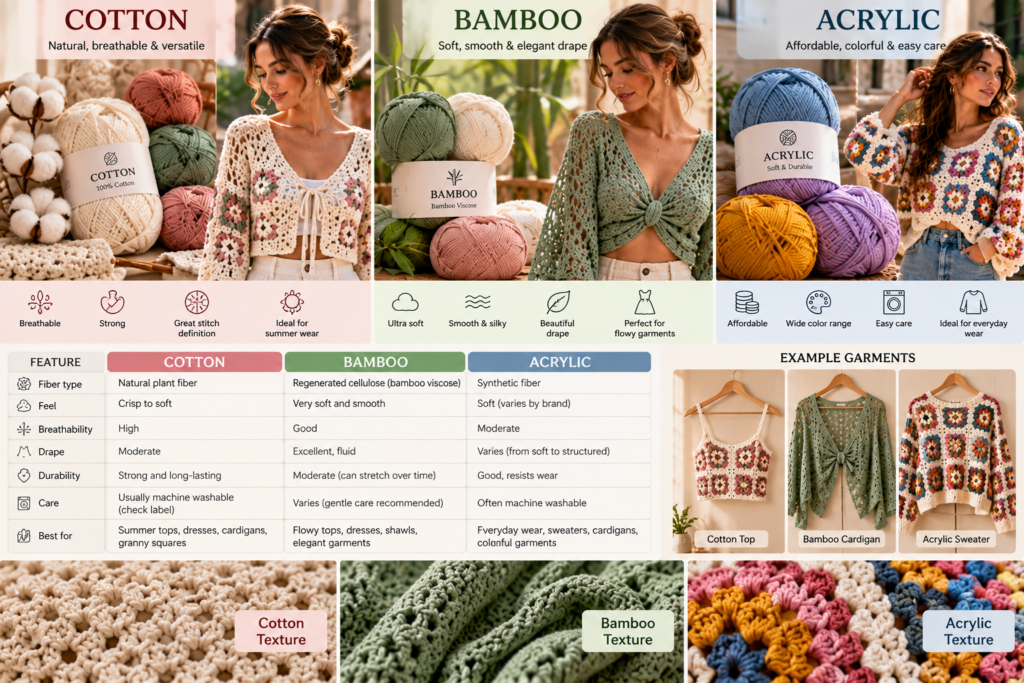
- Cotton vs. Bamboo vs. Acrylic: Which Is Better?
The best yarn depends on the priorities of the project. A summer top, a flowing dress, and a winter cardigan have different requirements, so comparing the fibers across several characteristics can help narrow the options.
Characteristic
Cotton
Bamboo-based yarn
Acrylic
Fiber type
Natural plant fiber
Usually regenerated cellulose
Synthetic fiber
Typical feel
Crisp to soft, depending on yarn
Often smooth and soft
Varies from soft to firm
Drape
Moderate, depending on construction
Often fluid and flowing
Varies by yarn and stitch
Elasticity
Generally low
Often low to moderate
Varies; some yarns recover better than others
Stitch definition
Often excellent
Usually clear and smooth
Share your thoughts
We'd love to hear your perspective. Keep it thoughtful and respectful.